Digital Newsletter
Each week our editor Phil Alsop rounds up the most popular articles, videos and expert opinions. We compile this into a Digital Newsletter and send it straight to your inbox every week.
Digital Magazines
We'll let you know each time a new edition of Digitalisation World is released so that you're always kept up-to-date with the latest and greatest news and press releases.
Video Magazines
The Digitalisation World Video magazine contains the latest Zoom interviews with experts in the industry.
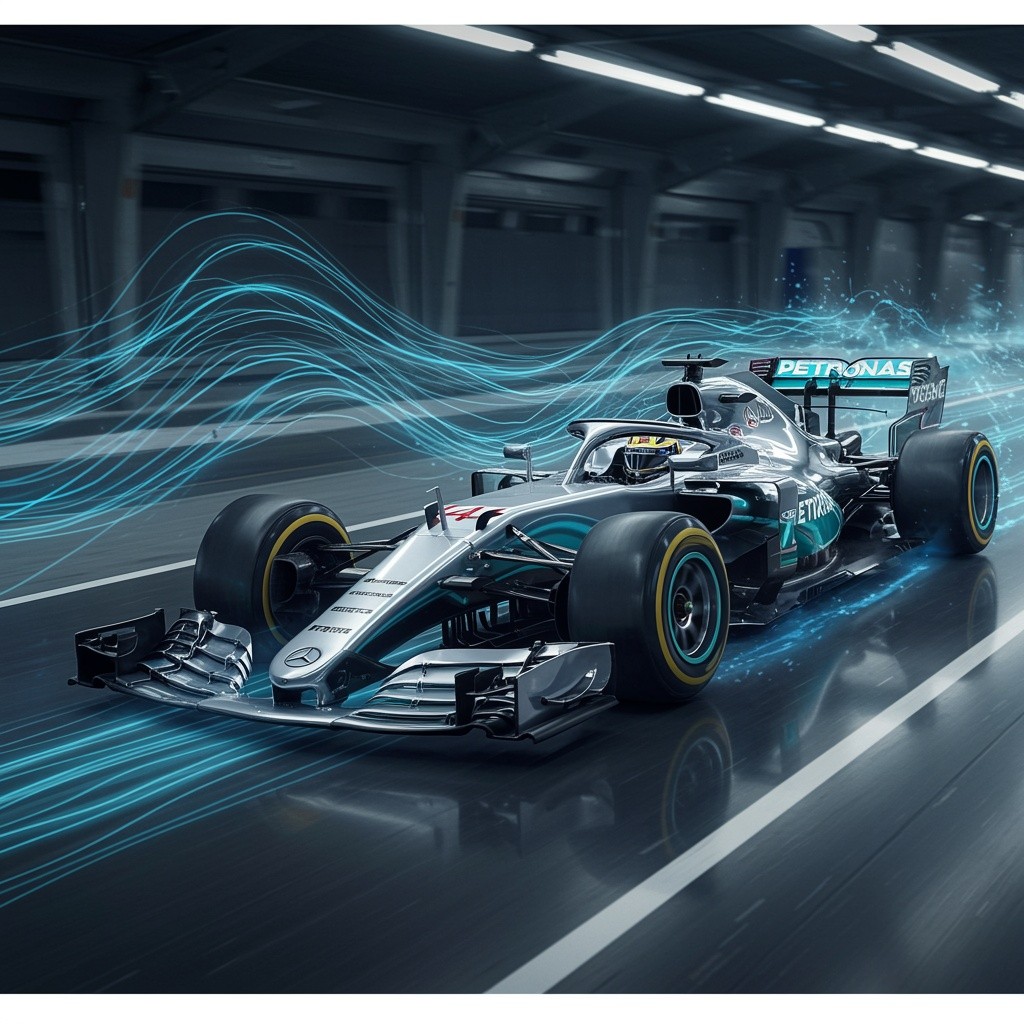
Formula 1 has deployed the Lenovo Neptune Liquid Cooling system as part of its technology infrastructure. This technology, aligned with the sport's sustainability strategy, aims to boost performance by up to 40% while enhancing energy efficiency.
This partnership sees the integration of Lenovo's Neptune solution into ThinkSystem SD665-N V3 servers. These servers efficiently dissipate heat at the processor level using warm water, reducing the power used for cooling dense computing infrastructures. Consequently, Formula 1 can handle more demanding data and AI workloads without a marked increase in energy consumption.
Dr. Tolga Kurtoglu, CTO at Lenovo, highlights how this cooling innovation can strengthen Formula 1's technological backbone, allowing broadcast operations to scale while maintaining energy efficiency and sustainability standards.
Operating as part of a longstanding Global Partnership, Lenovo empowers Formula 1's race operations and beyond, catering to over 600 employees with infrastructure ranging from AI laptops to Motorola smartphones. These resources facilitate global collaboration, enhancing the sport's coverage to over 1.6 billion viewers annually.
At each racing event, Formula 1's trackside Event Technical Centre (ETC) collects extensive data from car telemetry to camera feeds. Lenovo's platforms provide the computing power that supports these operations, streaming around 600 TB of live data each race weekend. This data transmits directly to Formula 1's Media & Technology Centre (M&TC) in Biggin Hill, UK, where the advancements in cooling technology are applied.
The M&TC serves as the nucleus of Formula 1's broadcast and data management. Supporting more than 180 software systems, the recently upgraded facility highlights the sport's commitment to pushing broadcast boundaries without sacrificing sustainability goals.
Lenovo's water-cooling technology plays an important role in meeting these objectives, as highlighted by Chris Roberts, Formula 1’s Director of IT. By reducing energy use compared to traditional methods, Neptune technology supports F1’s operations while contributing to the Net Zero target by 2030.
In collaboration with Lenovo, Formula 1 is updating its operations to handle increasing technical demands while maintaining a focus on sustainability, supporting a high-quality experience for fans.