Digital Newsletter
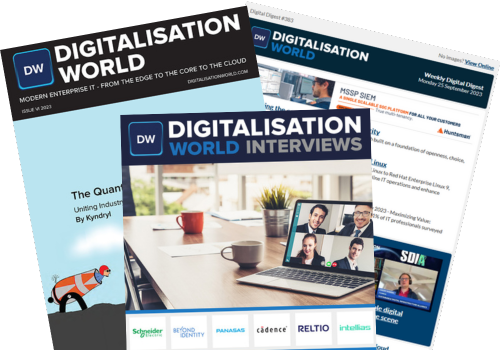
Each week our editor Phil Alsop rounds up the most popular articles, videos and expert opinions. We compile this into a Digital Newsletter and send it straight to your inbox every week.
Digital Magazines
We'll let you know each time a new edition of Digitalisation World is released so that you're always kept up-to-date with the latest and greatest news and press releases.
Video Magazines
The Digitalisation World Video magazine contains the latest Zoom interviews with experts in the industry.
Over the next decade, more than three in five (61%) IT decision-makers anticipate a rise in their organisation’s investment in data centre infrastructure to address upcoming challenges. Looking ahead, 95% of businesses view digital infrastructure as a potential risk.
These insights are the findings of a new report titled ‘Understanding the infrastructure challenges and investments as you navigate the next decade’ from Telehouse International Corporation of Europe, a leading global data centre service provider. 250 UK IT decision-makers were surveyed to understand their perspectives on digital infrastructure challenges, opportunities and goals for the next ten years.
At a time when AI is developing faster than any other previous innovation, the research highlights integrating AI and data analytics as the biggest infrastructure challenge IT decision-makers believe they are likely to combat in the next decade. Three years ago (2020), when Telehouse previously asked this question, AI integration was closer to the bottom of the list of key challenges anticipated, cited by 23% of respondents compared to 33% today – a 43% rise.
With cyber-attacks growing in frequency and sophistication, ‘maintaining security and compliance’ is the second biggest challenge IT decision-makers foresee in 2030. In fact, cyber-attacks are the most feared driver of network downtime over the next ten years, highlighted by one-third (33%) of respondents.
Navigating the ever-complex regulatory landscape and grappling with new compliance responsibilities is only likely to become more challenging in the future with AI already moving too fast to regulate.
The third biggest challenge anticipated by 29% of IT decision-makers in 2030 is ‘reducing the environmental impact of IT infrastructure’. With 17% of organisations committing to achieve net-zero by 2030 or sooner, the pressure is on to improve operational efficiency, reduce energy consumption and carbon emissions by the fast-approaching deadline.
“As organisations look ahead to the coming decade and beyond, the value of incorporating colocation is evident. With the need to improve operational resilience and take full advantage of emerging technologies, the computational capabilities found in modern-day data centres are suited to the challenge. Leading colocation providers consistently roll out customised solutions to meet their clients' needs, such as high-performance systems for AI applications and sustainable tools,” Mark Pestridge, Executive Vice President & General Manager of Telehouse Europe.